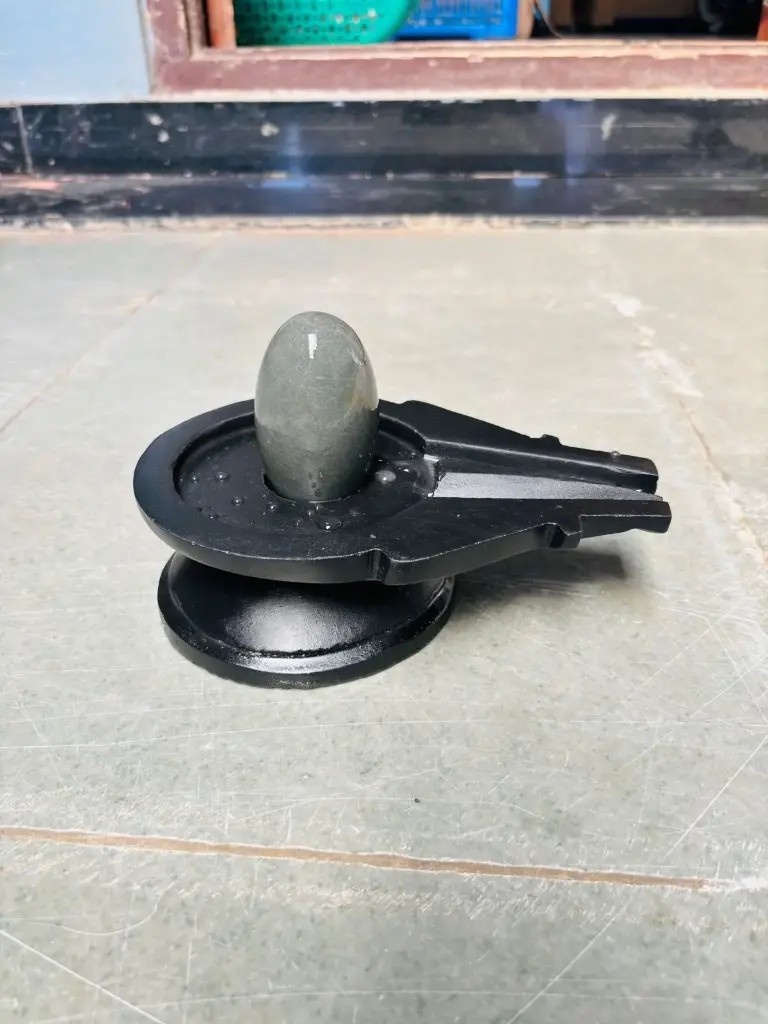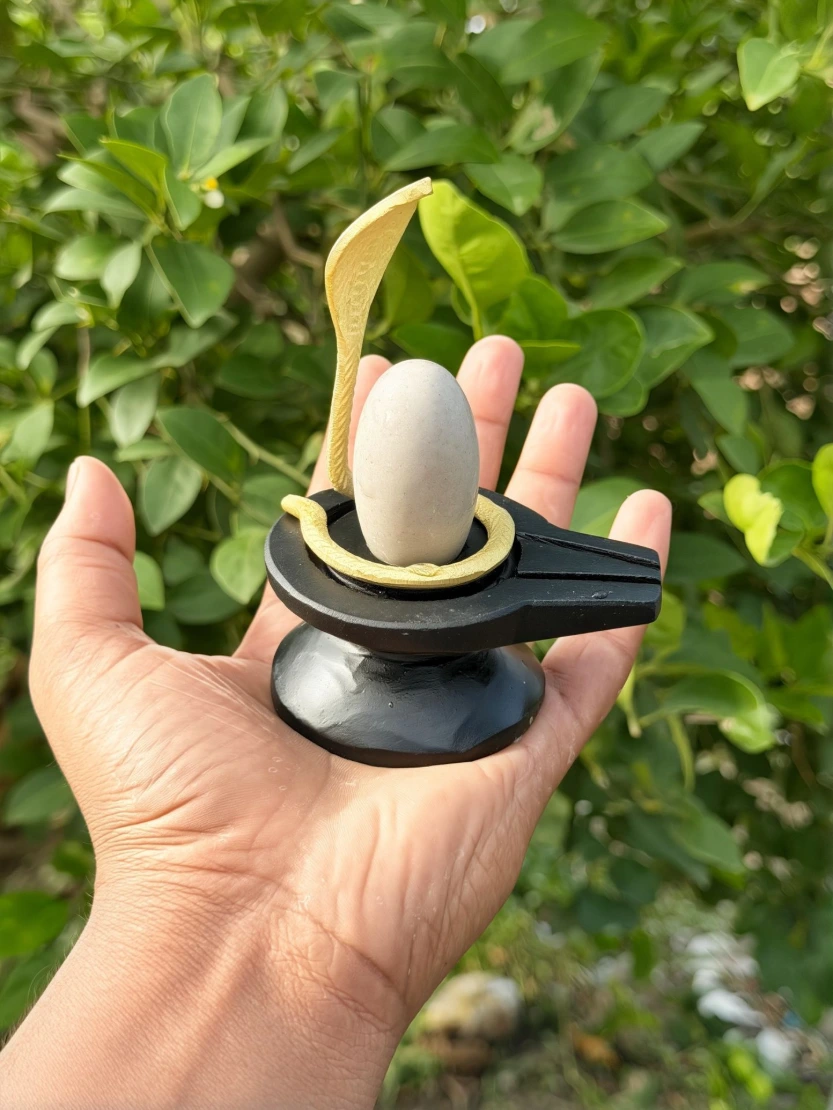
Narmadeshwar Shivling colours do not have one fixed universal count. Natural stone may combine a main shade with lighter bands, darker patches and contrasting areas. A list of five or seven colours cannot fully describe every individual piece.
Which shades may appear?
Pieces can show dark, brown, reddish-brown, grey and pale cream-like areas, along with mixtures. No single piece needs to contain all these shades. Commercial terms such as white or Neelkanth may be used, but a colour name is not a mineral classification or proof of river origin.
Is the colour untreated?
Ask whether the specific item has been coloured, coated or otherwise treated. Shine alone does not establish artificial dye, because polishing also produces gloss. Equally, a glossy surface does not prove that a colour is natural.
Photographs versus the actual stone
Wet stone may appear darker than dry stone. Warm lighting, sunlight and a phone’s image processing also affect colour. Request daylight images, a dry-surface photograph and a short video before ordering. Some screen-to-object variation is possible.
Bands and devotional names
A band may be interpreted as a sacred-thread or tilak-like marking. Such names describe devotional interpretations, not a scientific colour system. A particular shade cannot be treated as a guarantee of health, wealth or protection.
Choosing your preference
View the actual piece and consider your shrine and personal taste. Give source, dimensions and a stable base as much attention as colour. Before paying extra for a rare shade, ask for clear photographs and the basis for the seller’s claim.